Professional Services

Professional Services provided at CPNW India

At CPNW India, we deliver comprehensive and technically advanced corrosion protection solutions tailored to meet industry standards and project-specific requirements. Our professional services are designed to ensure long-term asset integrity, operational safety, and regulatory compliance across oil & gas, cross-country pipelines, tank farms, and industrial infrastructure projects.

Our Key Services Include:

  • Engineering & Design – Detailed Cathodic Protection (CP) system design as per NACE SP0169 & IS 8062 standards.
  • Technical Consultancy – Expert advisory services for corrosion assessment, ICCP evaluation, and CP system optimization.
  • Survey & Testing – Native potential survey, soil resistivity testing, DCVG/CIPS survey, interference testing, and depolarization studies.
  • Installation & Commissioning – Complete execution of ICCP & sacrificial anode systems including testing and performance validation.
  • Aging ICCP Assessment – Performance analysis and rehabilitation planning of existing CP systems.
  • Inspection & Certification Support – Compliance documentation, technical reports, and third-party coordination.
  • Project Management – End-to-end execution with quality control, safety compliance, and timely delivery.
  • Training & Technical Support – On-site guidance and CP awareness programs.

Design, Supply, Installation & Commissioning:

  • Impressed Current Cathodic Protection (ICCP)
  • Galvanic / Sacrificial Anode System
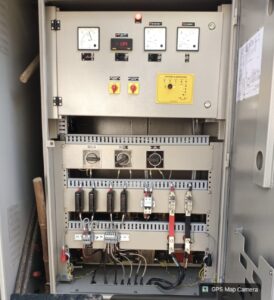
  • Transformer Rectifier Units (TRU)

Cathodic Protection (CP) Services

tr unit

Fundamentals of Rectifier Operation, Monitoring and Maintenance

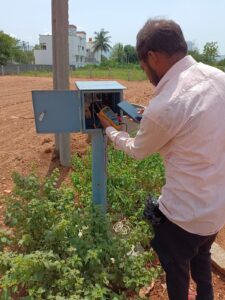
Monitoring at CP Test Station

tlp reading

Point Integrity Solutions CP Test Station Monitoring

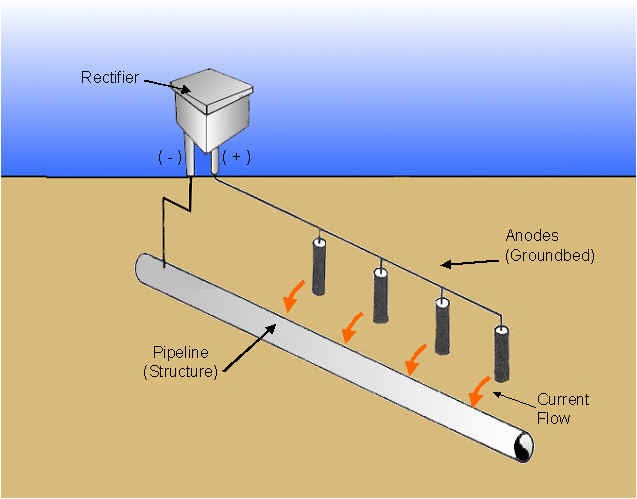
Cathodic Protection System

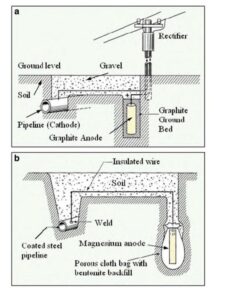
cathodic production design

ICCP System

Schematic Cathodic Protection Technique

schematic cathodic protection technique

Schematic Cathodic Protection Technique Impressed Current

Testing & Surveys

  • ON/OFF Potential Survey
  • CIPS (Close Interval Potential Survey)
  • DCVG / ACVG Survey
  • 24-Hour AC & DC Data Logging
  • Interference Testing (HV / Railway / Stray Current)

Standards Compliance

  • AMPP / NACE Criteria
  • IS & International Standards
  • ✔ Corrosion Mapping & Risk Assessment
  • ✔ Coating Evaluation & Defect Analysis
  • ✔ AC Corrosion Study
  • ✔ Audit & Health Check of Existing CP Systems
  • ✔ Technical Due Diligence Reports

Pipeline Corrosion Assessment Field Techniques

ampp

AMPP Pipeline Corrosion Assessment Field Techniques AMPP

Rectifier and Current Interupter

rectifier and current test box

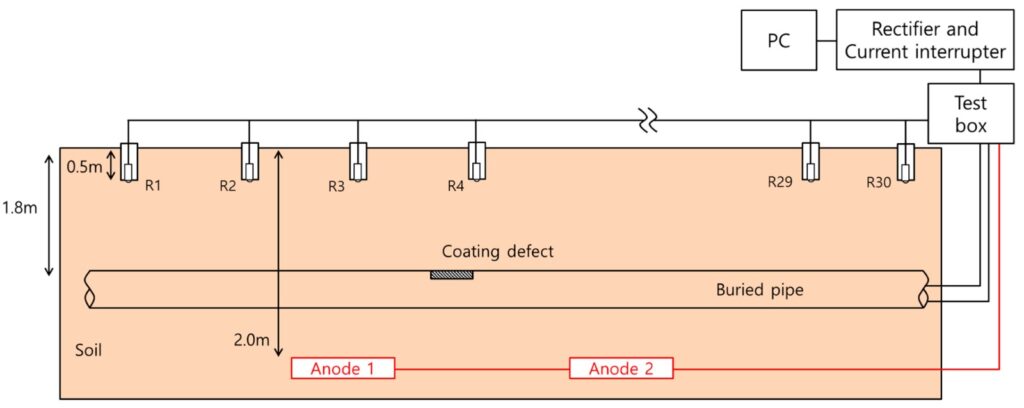
Effect of Electrode Spacing on the Detection of Coating Defects in Buried Pipelines Using Direct Current Voltage Gradient Method

Specialist Pipeline Survey

specialist pipeline survey

Specialist Pipeline Surveys | Comprehensive Pipeline Inspection Services

Pipeline Cathodic Protection (CIPS) and Coating Defect (DCVG) Surveys

pipeline cathodic protection (cips) and coating defect (dcvg) surveys

CP System BD Engineering has skilled technicians at all our office locations that specialise in Direct Current Voltage Gradient (DCVG) and Close Interval Potential Surveys (CIPS).

Electrical & Interference Studies

  • AC Interference Mitigation
  • DC Stray Current Analysis
  • Earthing & Bonding System Design
  • Lightning Protection Assessment

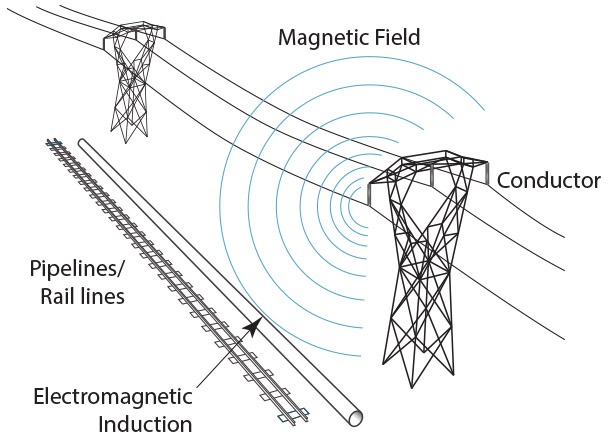
AC Interference in Shared Corridors

magnetic field

The image above illustrates a potential shared right of way with a transmission line, pipeline, and railroad. Each requires long linear paths and it is not uncommon for these industries to use the same right of way.

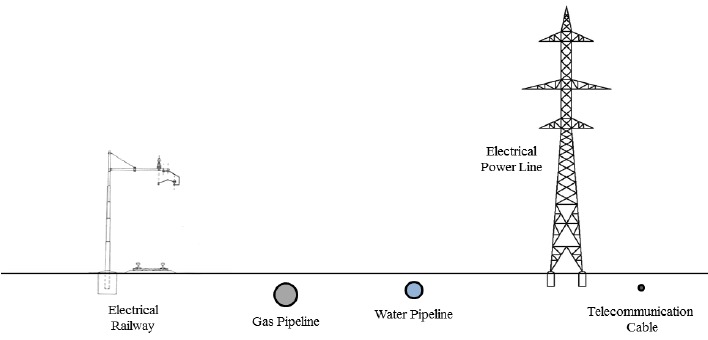
Common Distribution Corridor

power line

Artificial Intelligence Techniques applied in Electromagnetic Interference problems between HV Power Lines and Metallic Pipelines

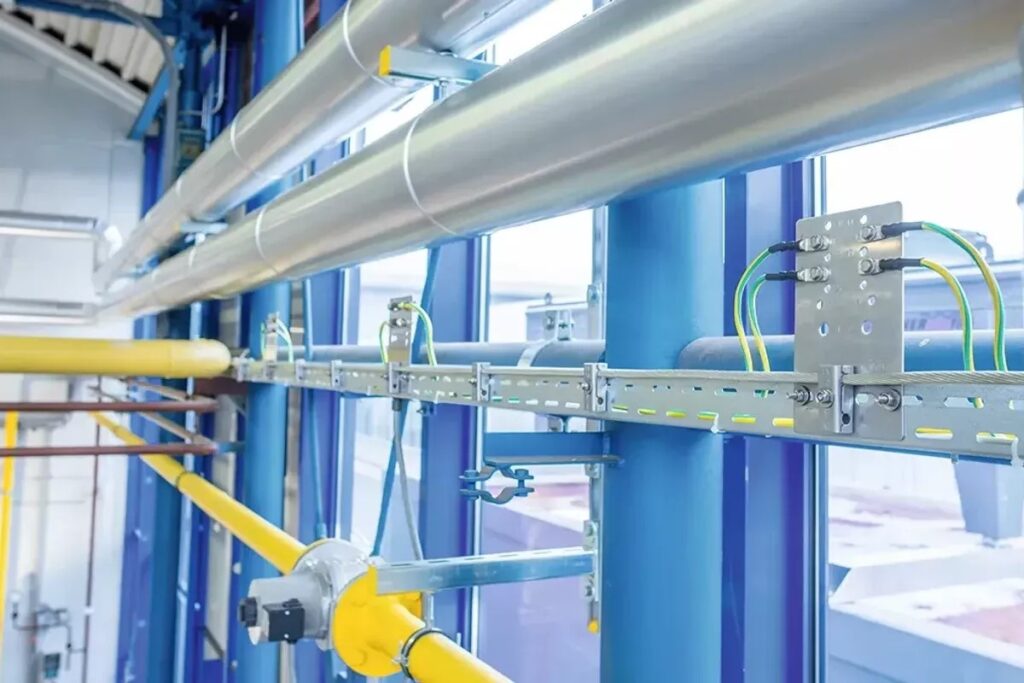
Equipotential Bonding in Hazardous Areas

equipements

Effective equipotential bonding is required for all electrical equipment installed. This also applies to systems that are located in potentially explosive atmospheres. The equipotential bonding system eliminates potential differences and thus prevents dangerous touch voltages. The potential conductor itself must not generate any ignition sparks.

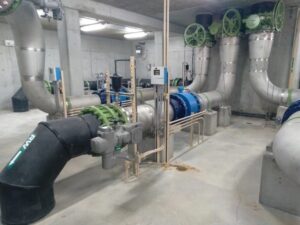
Bonding in Large Industrial Facilities

industrial

Bonding in large industrial facilities is a critical safety and corrosion control practice that ensures electrical continuity between metallic structures, equipment, pipelines, storage tanks, cable trays, and structural steel. Proper bonding minimizes potential differences, reduces the risk of stray current corrosion, and prevents hazardous spark formation in sensitive environments such as oil & gas plants, refineries, tank farms, and power stations.

Technical Documentation & Client Support

  • Detailed Commissioning Reports
  • Trend Graph Analysis
  • BOQ & Cost Estimation
  • Gantt Chart Scheduling
  • AMPP-Compliant Submission Format
  • Technical PPT Presentations (Client / Management Level)

Training & Consultancy

  • CP Technician Training
  • Fire Safety & Site Safety Awareness
  • Corrosion Awareness Programs
  • Site Troubleshooting & Expert Opinion

Need Help with Easier Industrial Solutions? We Are Experts!​

Click here to change this text. Lorem ipsum dolor sit amet, consectetur adipiscing elit. Ut elit tellus, luctus nec ullamcorper mattis, pulvinar dapibus leo.